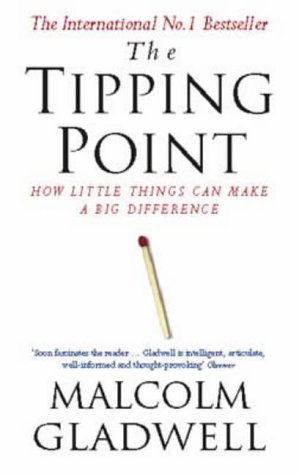
Gladwell, Malcolm. The Tipping Point: How Little Things Can Make a Big Difference. New York: Little, Brown and Co., 2000.
Gladwell’s book has shaped my approach to teaching by acknowledging that every interaction between a teacher and a student helps create the classroom environment. As a teacher, I understand that maintaining consistent and high standards of behavior and achievement is an important part of student success. His “broken windows” theory explains how the careful maintenance of physical surroundings can have a positive impact on the behavior of the people there.

Wiggins, Grant and Jay McTighe. Understanding by Design (2nd Edition). Upper Saddle River, NJ: Pearson Education, Inc., 2006.
Wiggins and McTighe have created a very valuable resource for teachers to use when writing lesson plans. Their "backwards design" method ensures that we plan lessons that will result in true understanding by students. By uncovering content instead of covering it, we can help students learn more and gain more meaning from their school experience.

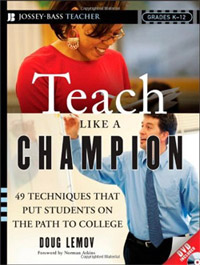
Lemov, Doug. Teach Like a Champion: 49 Techniques that Put Students on the Path to College. Hoboken, NJ: Jossey-Bass, 2010.
Lemov offers teachers concrete, proven techniques we can use to close the achievement gap and get our students to put forward their best effort. With preparation, hard work and attention to detail, we can create a classroom environment in which all students are motivated to learn.
Wineburg, Sam. Historical Thinking and Other Unnatural Acts: Charting the Future of Teaching the Past. Philadelphia: Temple University Press, 2001.
Wineburg's book gives social studies teachers a lot to think about. Developing teaching methods that allow students to truly achieve historical thinking is a challenge. Wineburg has many helpful ideas that can help us meet this challenge. He also challenges teachers to ponder the reasons why we should teach history at all. Even though it seems obvious to us, we need to be able to articulate to others (especially students who don't see the point of studying history!) that there is an important purpose to the topics we study.
Bigelow, Bill and Bob Peterson. Rethinking Globalization: Teaching for Justice in an Unjust World. Milwaukee: Rethinking Schools Press, 2002.
Bigelow and Peterson provide a new perspective on teaching social justice issues for all grade levels. They have an imaginative approach that presents younger students with vital information and helps them recognize the injustice in the world while empowering them to do something about it. The "rethinking schools" website that accompanies their book series also has an incredible amount of helpful and practical advice, including lesson plans and activities.
